Time—entity, social construct—has its ways of deceiving us. It doesn’t announce itself, appearing subtly in the cracks of a sign, in the fading colors in the political ads in quiet corners of the city, and in the rusted layers of metal exposed in the side walls of old buildings when the neighboring buildings give way to parking lots.
Just last week, walking around Toranomon—an area currently facing an intense process of urban redevelopment, there were old photos and fragments of local history: maps, photos, the origins of the names and how the neighborhood came to be.
Then it hit me: photos from daily life are portraits of now, but only until it shifts. The question becomes: when do they become historical? I would say that it becomes historical as soon as something—anything, really—changes. Sometimes just a new sign, a fresh coat of paint, a building renovation.
In this sense, since last summer, I have been experimenting with film photography, after finally figuring out how to set up a Lomoapparat I was gifted some years ago.
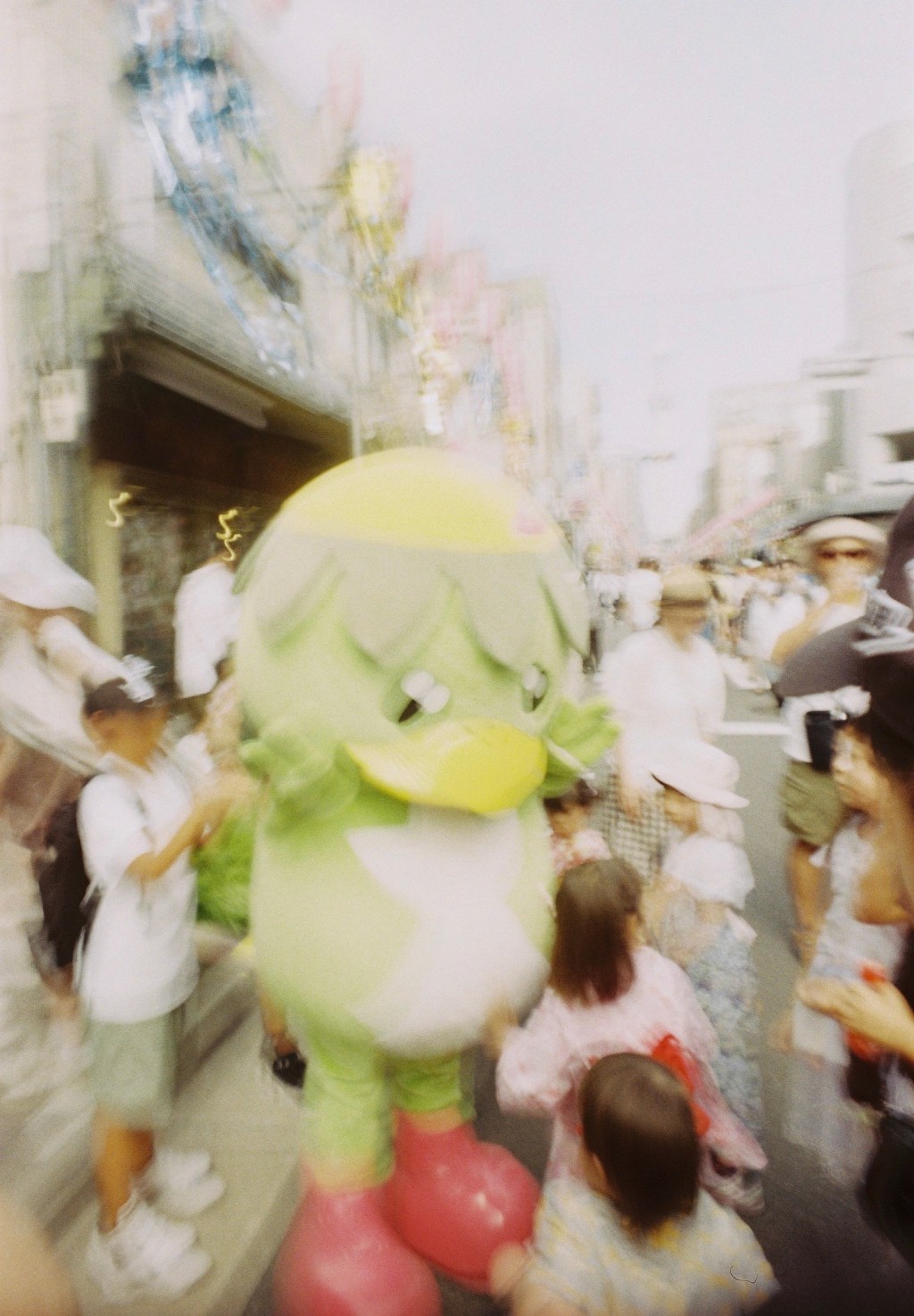
As a result, I developed the film I used to capture some scenes around the city. The pictures looked like a fever dream: unfocused, color-faded, shaken. They tell a story, but also raise questions for anyone who looks.
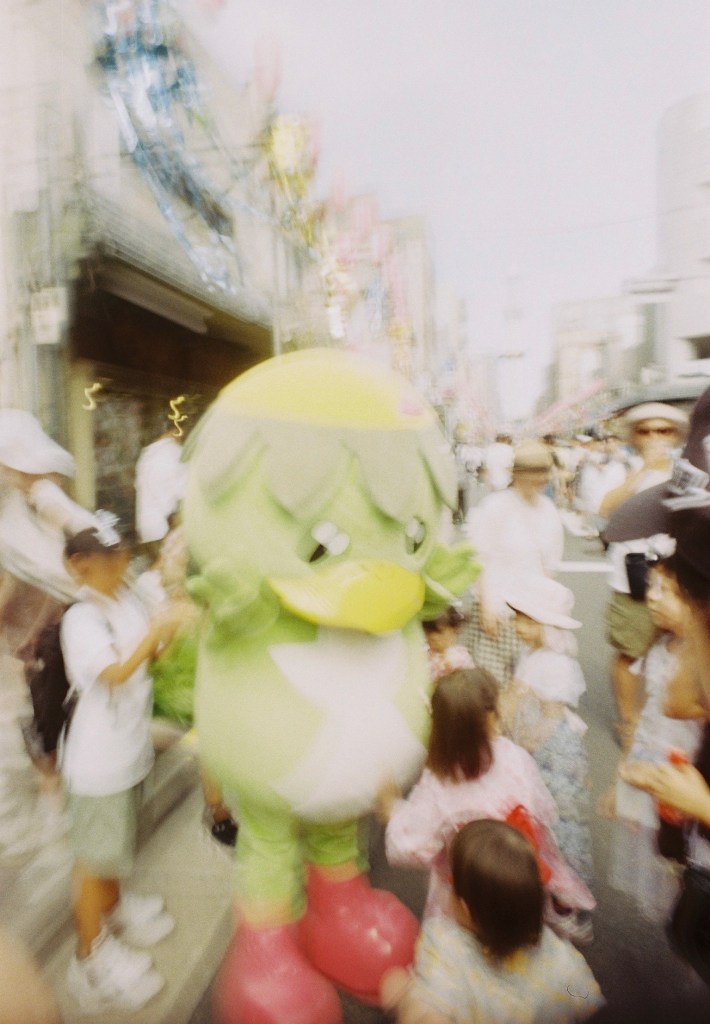
There is a word in Portuguese: saudade. People often say it is untranslatable. It’s the longing for a time past—usually sweet. A yearning, without the somber enveloping of melancholy. A sweet sadness caused by thinking of joyful moments past, with one caveat: it can apply to times we’ve never lived through.
With that in mind, seeing the developed pictures from my toy camera a year after they had been taken, I felt this sweet melancholy. But it was not the only time I noticed these time-passing hints.
Near my current house, there is this small neighborhood market. On its door, a boy with a cap. Recently, as I walked past it on my way to the subway, I noticed that the logo is cracked and worn, likely from years of sun exposure and cleaning agents.
It also reminded me of a market near where I grew up. Its logo was a cheerful paper shopping bag with a smiley-like smile. Since it was a small neighborhood market, I doubt there are any photos left. After all, who would take a picture of an ordinary street on an ordinary day, if they assume that it will remain unchanged?
These pictures, fragments of a neighborhood history, pieces of a life we cannot return to—help us localize ourselves in time and space, showing us that things were different but we were too busy to realize. And by the time they’re gone, it’s too late.
That’s why this summer I am trying to be more deliberate with the pictures I take in film and digital. When developed, these pictures may become markers of a time I wish I could have seized but let slip by too fast.
Because even if time is a social construct, it punishes those who take it for granted. It shows in the sun-faded images, in the cracking logos, in the warped wooden facades of pre-war buildings still standing.
And in the end, the memories that stay with us might be as simple as a supermarket’s cheerful paper bag logo smiling at my 6-year-old self. As if it were peeking into the passersby souls—like it knew it would, one day, be forgotten.
If you liked this text, enter your email and get all the updates on your inbox!
 fernando ursine
Leave a comment